
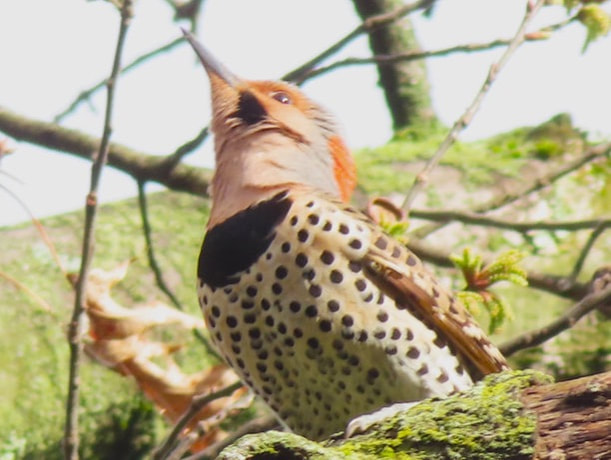
A composite photo by Danny Mo. The northern flicker family had two units in the apartment complex, each housing two young ones. The dad fed the kids from one side and the mom did it from the other. I saw the dad also taking care of the ones residing upstairs.


|
Summer at Brightwood Park

Chuan-Chu Chou, June 17th
|
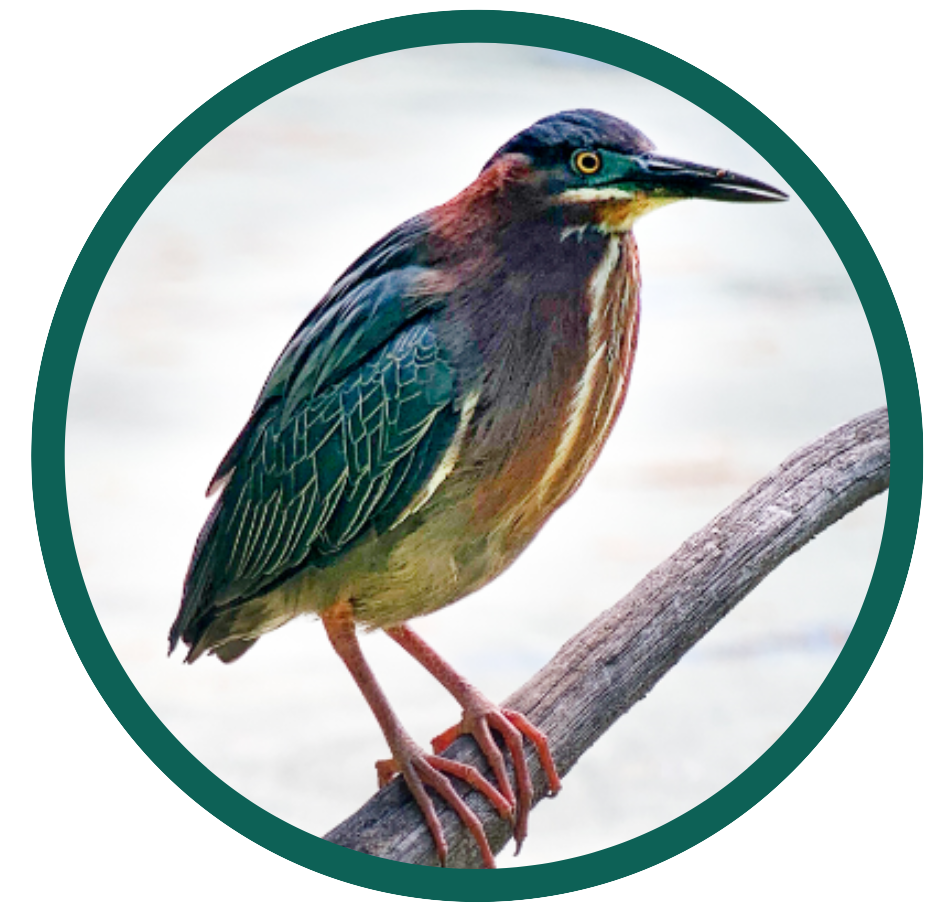
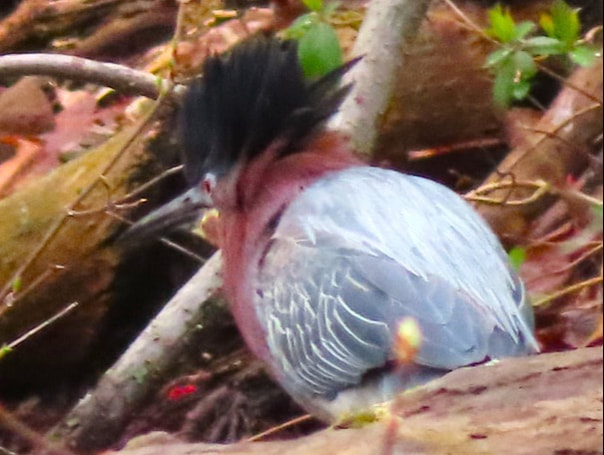
Rescue of a young Green Heron
|
|
Friday, a Friend of Brightwood Park Trustee, Chuan-Chu, and a friend visited the park around 7:30 in the morning.
While they were walking in the park and passing the bridge and the dam, they heard a noise in the pond and saw an object struggling underneath a tree. After a close examination, it turned out to be a young green heron trapped in fish lines and two fish hooks. The bird looked exhausted and was extremely nervous. They tried to untangle the lines to release the poor bird. After being bitten by the bird a few times and stung by the fish hook once, we were able to set the heron free. They were glad to see that the bird had flown up to a tree and was standing up on a branch recovering. |
If you fish in Brightwood Park....Please don't leave behind fish lines or hooks, which can create hazards for both people and animals.
|
|
Native Planting ProjectThe Pollinator Garden in the parking lot is bigger and better this year. Thanks to hard work by volunteer Bianca Wright and many others, this garden has been extended along the length of the parking lot and many new plants have been added.
The goal is to introduce native plants to increase the biodiversity of the flora in Brightwood, and by extension, the biodiversity of the bugs, butterflies and fauna that are characteristic of a healthy ecosystem. Look for these demonstration gardens and plantings when you visit Brightwood Park. Photos by Denise Ricci and Chuan-Chu Chou |
Near and Far; Young and Young at Heart.
The Brightwood Park Bird Hats are Everywhere!

Bird spotting in the City!
|

Bird Hats in Beloit, Wisconsin!!
Upal, Tracy, Joy and Jordy
|

The Bird Hat has been spotted in Germany!
|

Oliver, sporting his Orange Bird Hat.
|
Thanks for your support!! And send us your pictures!
Friends of Brightwood Park GearHats in many colors!
Hats for Kids! New Toddler & Youth Tees! New Adult long-sleeve Tees! |
|
Field Notes: Summer in Brightwood Park

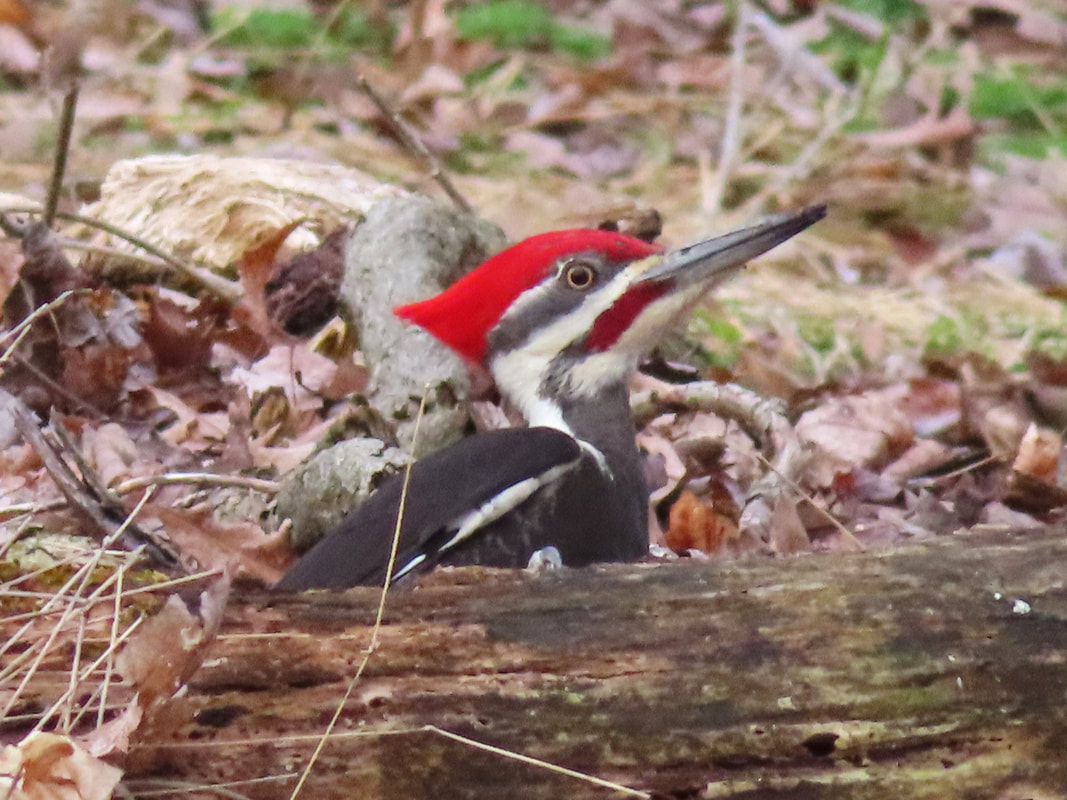
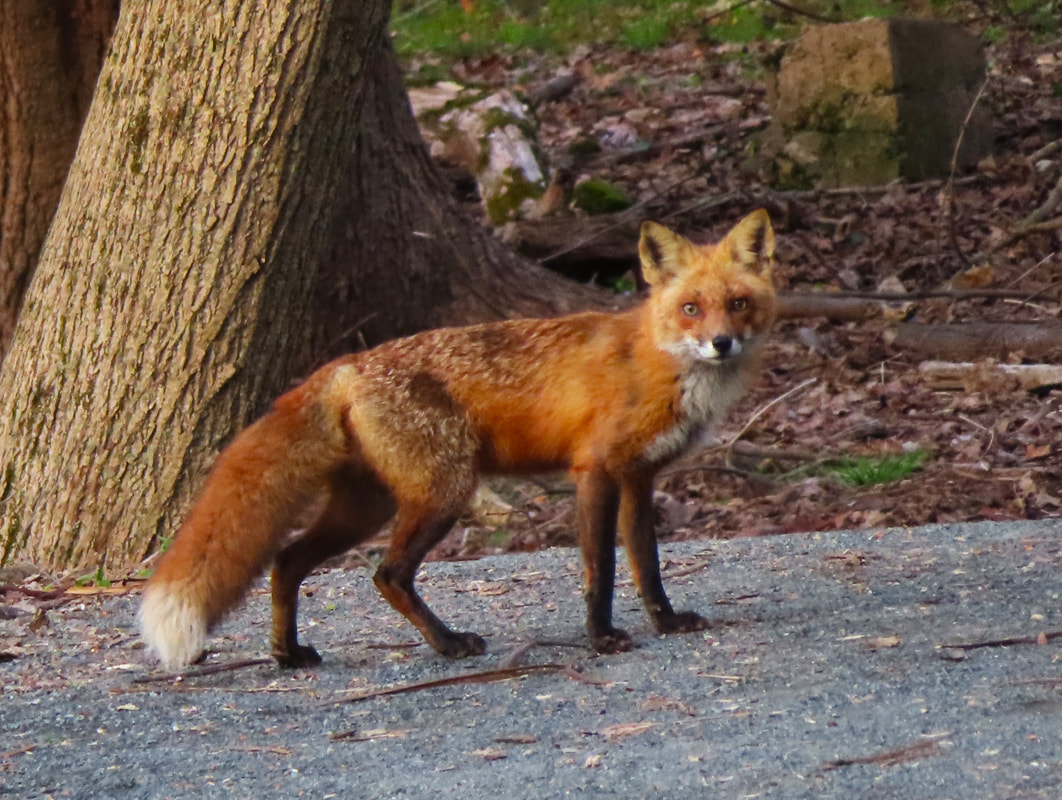
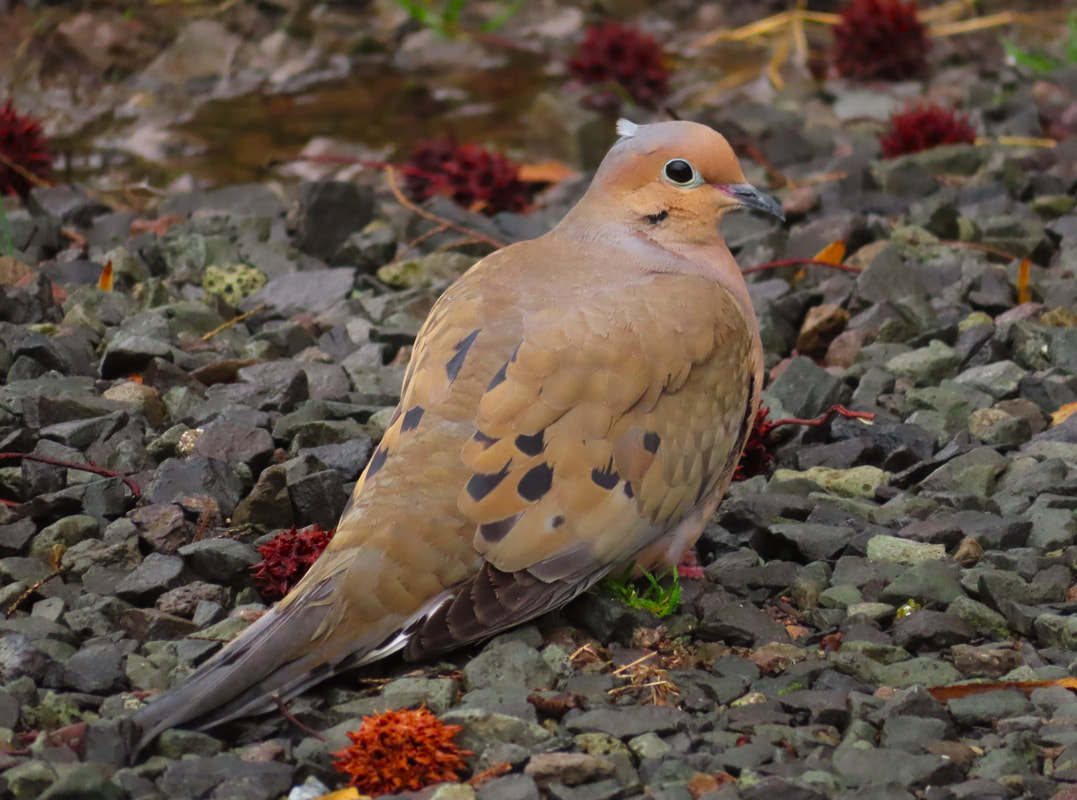
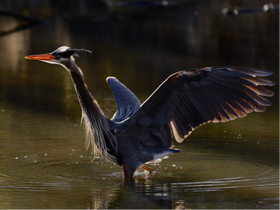


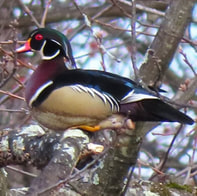


Unless otherwise noted, the photos by Chuan-Chou. Eastern Milk Snake photo by James McDonald.
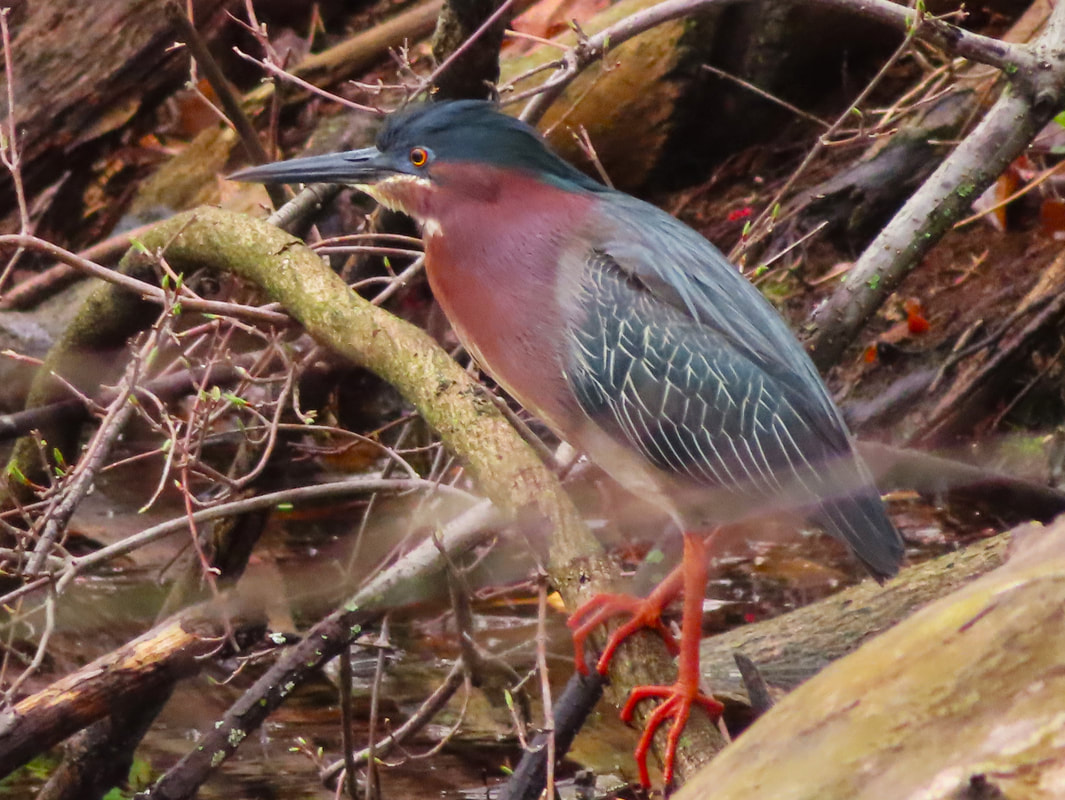
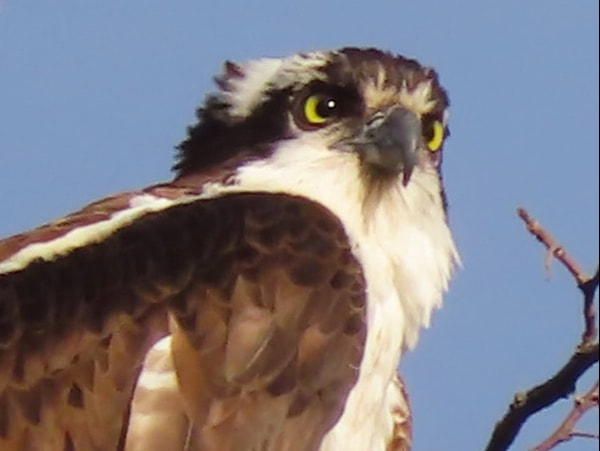
Green Herons Return - with friends!
|
|
|
|
It's a good time for bird watching up at Brightwood Park. Send us your photos (and note date, time and caption) for the "Field Notes" section. Also our friends at Wild Birds Unlimited have posted a live cam of a local Barn Owl nest. link
- photos by Chaun-Chu Chou
Nature Detectives - Classes for Kids - 2024 Classes

A Nature Detective at Work
Our educational monthly classes are each a different theme and encourage children to explore the natural setting at Brightwood Park
For more information and sign ups, see
Westfield Recreation Page |
No Classes at Brightwood this Summer - See you in the Fall!
September 19thAnimals in Brightwood parkclass description coming soon! 4 Session - 11:00, 11:30 AM and 3:00, 3:30 PM
Limit 10 families per session 2-4 Year Olds with Adult 10:00 to 10:45 am
5-8 Year Olds 3:45 to 4:45 pm Fall Class Schedule
September 19- Animals in Brightwood Park
October 17- Birds Are Special October 26- Jack O Lantern Trail, Rain date, Oct. 27 November 21- Is It a Bird, a Plane? No, It’s a Cloud! December (date TBA) - Wild Art in the Park |
|
History Tours of Brightwood
2024 Dates
|
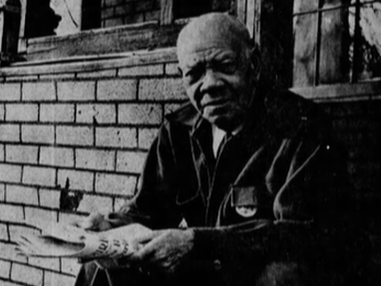
Samuel Jarvis, 76, of Fanwood Ave (now part of Brightwood Park).
The Brightwood area was once a center of African American society in NJ. The Friends of Brightwood, in an effort led by Rob Lombard, has begun to explore and document this history.
The latest addition to the set of stories...
|
of recent interest....
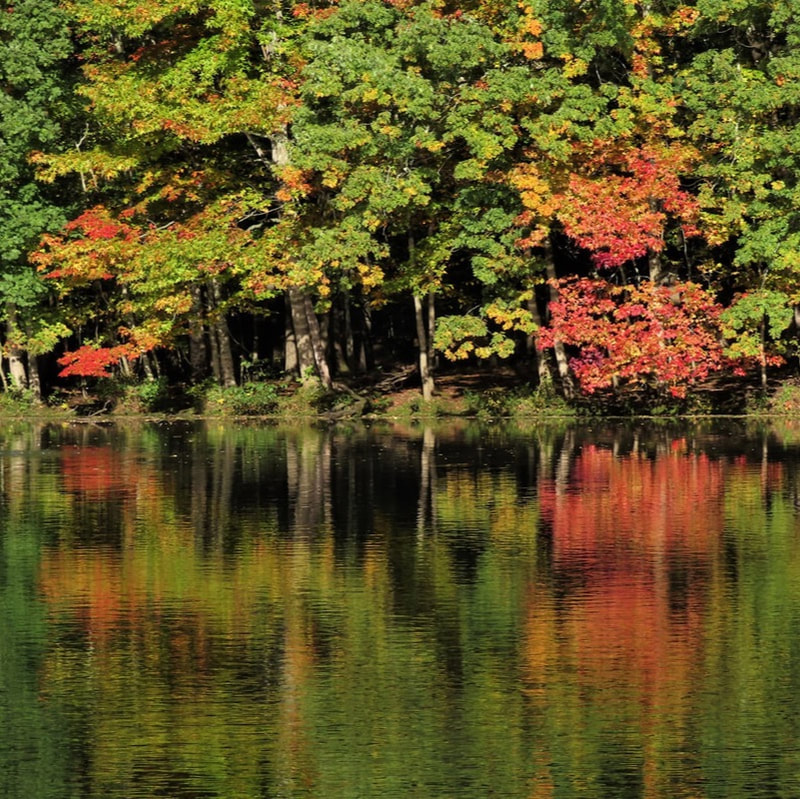
Surrounded by suburban development, Brightwood Park’s trees stand as an oasis. This patch of trees cleanses our air, provides oxygen to breathe, filters underground water, and provides shelter for all kinds of wildlife.
It is why we are so passionate about these 44 acres! Photograph by Lisa Cladis |
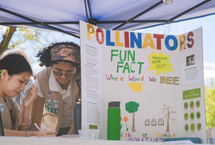
Edison Scouts Build Pollinator GardenEdison Intermediate School students Mahie Panjwani, Madeline Schlitzer and Kayla Yip are spreading the word about native plant gardens.
Conservation Projects - Scouts and Local StudentsScouts and student conservationists are tackling the hard tasks of documenting the effects of invasive species, working towards reforestation, pollinator gardens and protecting young trees from deer. Learn more at PERSPECTIVES ON THE PARK. and Brightwood Student Projects |


|
Friends of Brightwood Park is a grass roots volunteer organization on a mission to restore the park and to educate about the environmental benefits of biodiversity. The work we do would not be possible but for the generous contributions of time and talents by our many volunteers. In appreciation, we offer a spotlight on volunteers in the park. This edition: Stella Alvo.
Stella has been volunteering with us for years working on our database - a formidable charge - as well as helping at many of our other events. We thank her for her generosity of spirit and positivity. It is truly a gift having such a brilliant and joyful person working with our group! Would you like to volunteer your talents, meet other passionate and fun people, and make this one little slice of nature healthier? Join us!! |

|
Volunteers Needed!
|
viewpoints
|
|
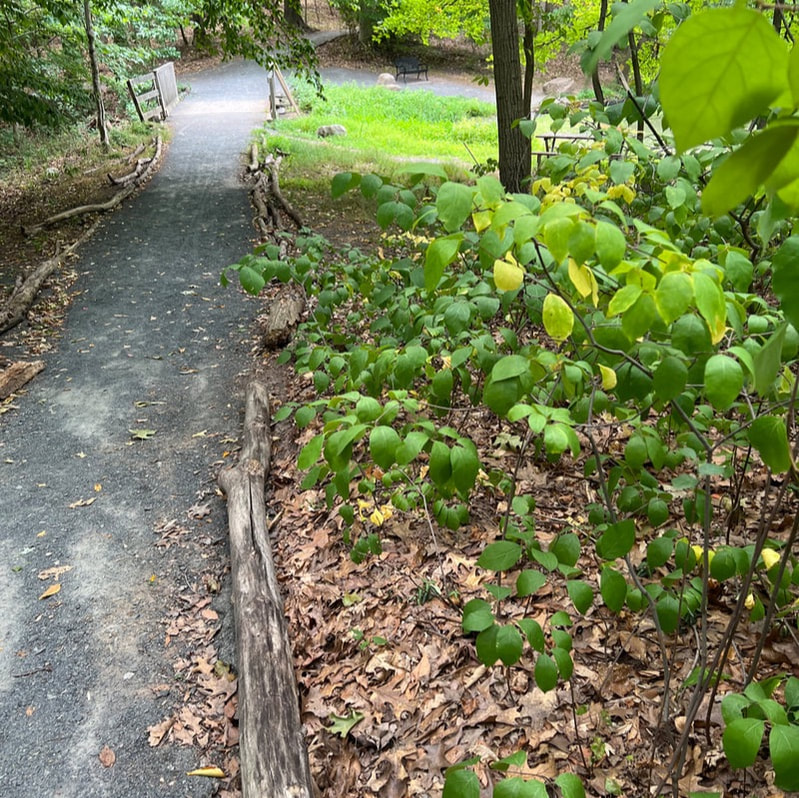
Friends of Brightwood Park are working to:
- preserve & restore the park as a nature sanctuary
- remove invasive species that threaten native plants & trees
- promote hiking, walking, fishing, birdwatching and activities in harmony with the habitat
- offer nature and art programs for all ages
|
2023 - Review & 2024 Preview
|

|